
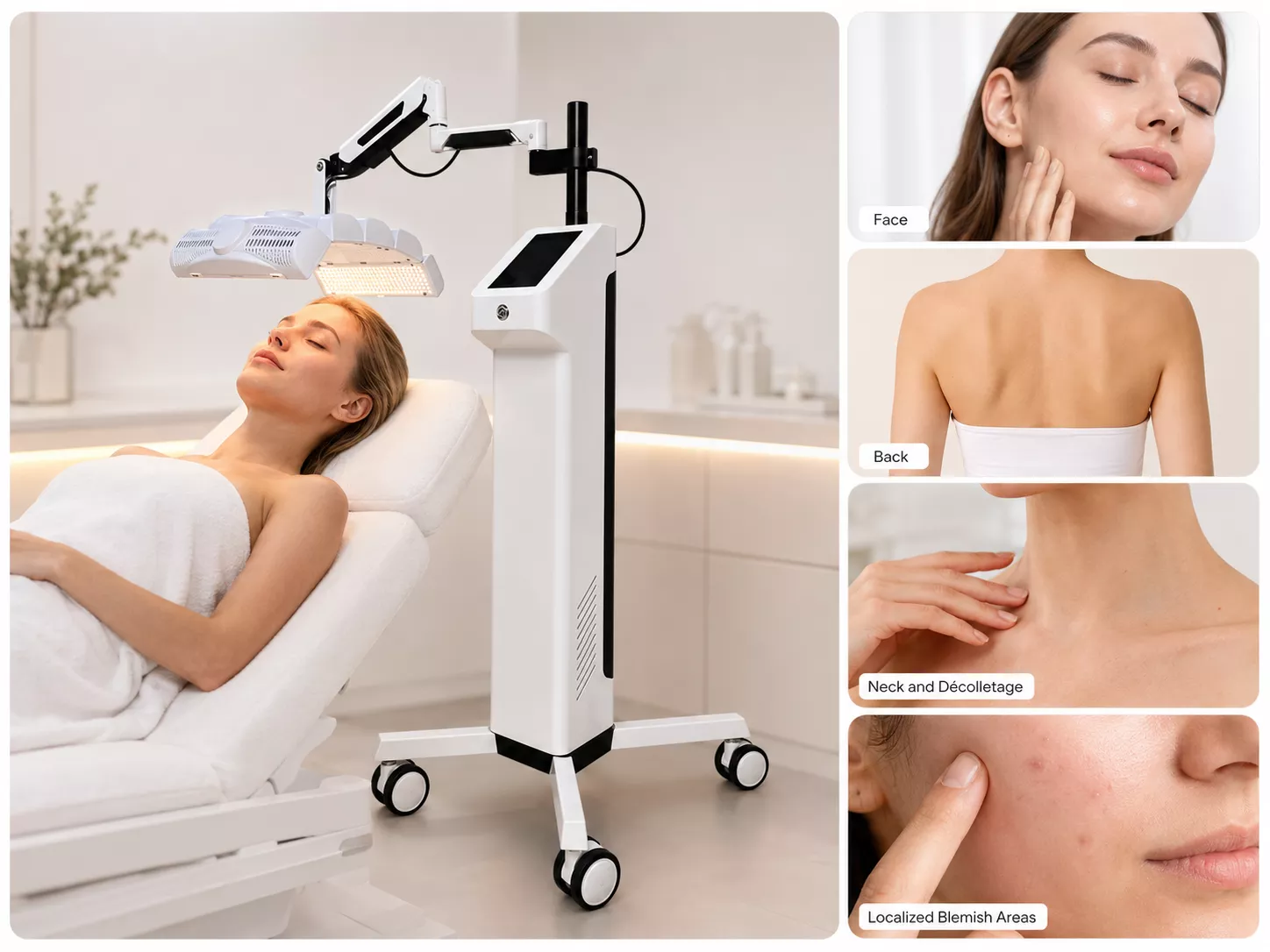
PDT treatment is widely used in beauty salons, med spas, and skin management centers. In the beauty equipment industry, it often refers to non-invasive LED phototherapy using red, blue, yellow, and other visible-light wavelengths. These modes are commonly added to facial and body-care programs for soothing care, blemish-prone skin management, and overall skin appearance.
Cosmetic LED phototherapy is different from medical photodynamic therapy. Medical PDT combines a photosensitizing medicine with a controlled light source. Cosmetic LED phototherapy typically uses LED light alone, so its purpose, risks, and aftercare differ.
What Is LED PDT Treatment?

LED phototherapy uses light-emitting diodes to expose the skin to selected wavelengths. Different wavelengths support different aesthetic goals, but color is only one factor. Treatment time, output, distance from the skin, and the client’s skin condition also matter.
The Sunwinbeauty SW-B005 is a professional seven-color LED phototherapy machine for salons, med spas, and aesthetic clinics. It features 840 LEDs, seven selectable light modes within a stated 400–630 nm range, a flexible treatment arm, a seven-inch touchscreen, and adjustable treatment times from 1 to 60 minutes. Its non-contact treatment head can be positioned over the face or selected body areas.
The time range is an operating range, not a universal recommendation. Operators should follow the equipment instructions and choose suitable settings for each client.
LED Phototherapy vs. Medical PDT
Medical photodynamic therapy uses a photosensitizing drug before the skin is exposed to light. Cosmetic LED phototherapy generally does not.
Salon LED phototherapy should therefore be described as supportive skin care rather than a procedure that diagnoses, cures, or prevents disease. LED-only sessions usually involve little downtime, while medical PDT may cause stronger redness, peeling, discomfort, and light sensitivity.
Common LED Colors and Their Applications

Red Light
Red light is commonly used in soothing and mature-skin programs. It may support a smoother-looking complexion and improve the appearance of dryness, roughness, fine lines, or temporary redness.
Salons should use wording such as “supports soothing care” or “helps improve overall skin appearance.”
Blue Light
Blue light is often used for oily and blemish-prone skin. It can be added to a routine that includes cleansing and suitable skin-care products.
It should not be presented as a complete solution for every type of acne. Severe, painful, or persistent acne requires professional medical advice.
Yellow and Other Light Modes
Yellow light is commonly selected for skin that looks dull, tired, or temporarily red. Seven-color systems may also include green, purple, cyan, or combined-light modes.
More colors do not automatically produce better results. The program should match the client’s skin condition and treatment goal.
Possible Side Effects
LED-only phototherapy is generally non-invasive and well-tolerated when performed correctly, but it should not be described as completely risk-free.
Temporary reactions may include:
- Mild redness
- Warmth or temporary tightness
- Dryness
- Mild tingling
- Short-term sensitivity
- Eye discomfort without correct protection
The treatment should stop if the client experiences strong burning, increasing pain, unusual heat, visual discomfort, or rapidly worsening redness.
Burns, blisters, or lasting pigmentation changes are uncommon, but the risk may increase when unsuitable settings are used or when treatment is performed on irritated skin.
Does PDT Treatment Hurt?
A correctly performed LED-only session should not normally be painful. Many clients feel nothing, while others notice gentle warmth or mild tingling.
Strong stinging or burning may indicate excessive treatment time, unsuitable output, incorrect positioning, or a weakened skin barrier. The operator should stop the session and reassess the settings.
Medical PDT may be more uncomfortable because it uses a photosensitizing medication. Beauty salons should clearly explain which type of light treatment they provide.
Is It Suitable for Sensitive Skin?
Sensitive skin is not automatically unsuitable for LED phototherapy, but treatment should be approached carefully.
Before the first session, operators should ask about:
- Active skin irritation
- Recent sunburn
- Recent chemical peels or laser procedures
- Known light sensitivity
- Current medication
- Open wounds
- Existing skin conditions
- Previous reactions to light treatments
A shorter first session, conservative settings, and a small-area test may be appropriate. Treatment should be postponed when the skin is severely irritated, infected, sunburned, or affected by an unexplained rash.
Clients taking photosensitizing medication or living with a light-sensitive condition should seek medical advice before treatment. Suitable protective eyewear should always be used.
Suitable Treatment Areas

Face
The face is the most common treatment area. LED light may be applied to the forehead, cheeks, chin, T-zone, and localized blemish-prone zones.
Makeup, surface oil, and heavy skin-care products should normally be removed first. The eyes must remain protected throughout the session.
Back
The back may be included in programs for oily or blemish-prone skin. A large non-contact treatment head can provide broad coverage.
Operators should position the light evenly and avoid excessive overlapping exposure on the same area.
Neck and Décolletage
The neck and upper chest can be included in soothing or appearance-focused programs. Because these areas may be more delicate, the settings should be selected separately rather than copied directly from a facial or back protocol.
Localized Blemish Areas
LED light may also be directed toward selected blemish-prone areas. However, painful, spreading, or repeatedly inflamed lesions should be assessed by a qualified healthcare professional rather than treated only with LED light.
Is There Any Downtime?
After an uncomplicated LED-only session, most clients can return to their normal activities. Mild warmth or temporary redness may occur, but downtime is usually limited.
Recovery may be different when LED light is combined with:
- Chemical peels
- Microneedling
- Laser procedures
- Strong exfoliation
- Photosensitizing products
- Medical photodynamic therapy
Clients should follow the aftercare instructions for the complete treatment program, not only the LED stage.
Can You Wear Makeup After Treatment?
When the skin feels calm after an LED-only session, makeup can generally be applied.
If the skin is red, dry, or irritated, it is better to delay heavy makeup. Clients should use clean makeup tools and gentle products.
Strong acids, retinoids, scrubs, and other potentially irritating ingredients should not be applied immediately to sensitive skin. Clients who receive medical PDT must follow their clinician’s instructions.
Aftercare Tips Following LED PDT Treatment
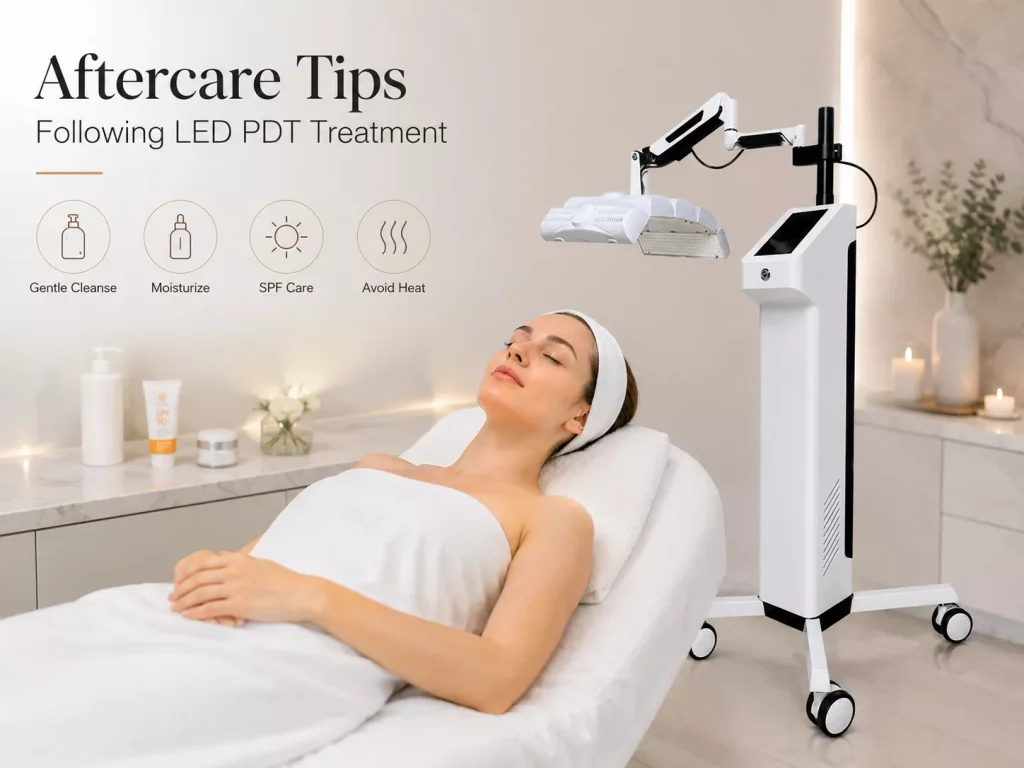
After an LED-only session, clients should keep their skin-care routine simple.
- Cleanse the skin gently without scrubbing.
- Apply a mild moisturizer suitable for the skin type.
- Use daytime sun protection.
- Avoid excessive heat, steam, and friction if the skin feels sensitive.
- Avoid strong exfoliating products immediately after treatment.
- Do not pick or squeeze blemish-prone areas.
- Record any delayed reaction before the next appointment.
Persistent pain, severe swelling, blistering, increasing discoloration, or worsening irritation requires professional assessment. Another LED session should not be used to manage an unexplained adverse reaction.
How Often Should PDT Treatment Be Performed?
There is no single treatment schedule for every client, wavelength, device, or skin concern.
The SW-B005 offers adjustable treatment times from 1 to 60 minutes. However, this does not mean every client should receive a long session.
A professional treatment protocol should consider:
- Selected wavelength
- Treatment area
- Device output
- Client skin type
- Previous skin response
- Treatment goal
- Other procedures used during the appointment
More frequent or longer exposure does not automatically produce better results. Consistent and correctly controlled use is more important than selecting the maximum available treatment time.
New clients may require shorter sessions and more conservative settings. If redness, dryness, or sensitivity continues after treatment, the interval between sessions should be extended.
How Salons Can Improve Treatment Safety
Before treatment, operators should ask about medication, light sensitivity, existing skin conditions, and recent cosmetic procedures.
During the session, operators should:
- Use suitable protective eyewear.
- Position the treatment head correctly.
- Select conservative settings for new clients.
- Monitor the client’s comfort.
- Stop the session if strong discomfort develops.
- Record the selected settings and skin response.
- Keep the equipment and treatment area clean.
The SW-B005 includes a flexible arm, touchscreen operation, and a non-contact treatment head, helping operators position the light for different facial and body areas. However, safe results still depend on professional training, suitable settings, and correct client screening.
Salons should also avoid claims such as:
- “Cures acne”
- “Permanently removes wrinkles”
- “Repairs all skin damage”
- “Works for every skin type”
- “Has no side effects”
More appropriate wording includes “supports soothing skin care,” “suitable for blemish-prone skin management,” and “helps improve overall skin appearance.”
Frequently Asked Questions
Is PDT treatment painful?
LED-only phototherapy is usually comfortable. Severe pain, burning, or increasing heat means the treatment should stop.
Can sensitive skin receive LED therapy?
Some sensitive clients may tolerate conservative settings. However, active irritation, photosensitivity, and certain medications require additional caution.
Does LED PDT require recovery time?
LED-only sessions normally have little downtime. Medical PDT and combined cosmetic treatments may require a longer recovery period.
Can I wear makeup afterward?
Usually, yes, provided the skin feels calm. Makeup should be delayed when redness, dryness, or irritation is present.
Conclusion
LED phototherapy can be a practical, non-contact addition to professional facial and body-care services. A seven-color system such as the Sunwinbeauty SW-B005 gives salons multiple light options, adjustable treatment times, and flexible positioning for areas including the face, neck, back, and localized blemish-prone zones.
Safe treatment depends on client screening, suitable settings, protective eyewear, realistic expectations, and clear aftercare instructions.
Most importantly, cosmetic LED phototherapy is not the same as medical photodynamic therapy. Severe acne, persistent redness, unusual skin lesions, and significant adverse reactions should be evaluated by a qualified healthcare professional rather than managed only with salon light treatments.


 EN
 ES
 AR
 FR
 JA
 DE
