

Table of Contents
Buying a beauty machine is not only about choosing a device. For beauty salons, aesthetic clinics, distributors, and private-label brands, the real question is whether the supplier can provide reliable beauty machine technical support before, during, and after the purchase.
A reliable beauty machine supplier should help buyers choose the right device, understand how to operate it, prepare business materials, solve technical problems, and manage OEM/ODM customization when needed. Sunwin’s Technology and Support Services page highlights key support areas, including OEM/ODM solutions, business cases, product operation technical support, and buyer FAQs. It also emphasizes complete customization, direct manufacturer support, fast response, and sustained improvement.
For B2B buyers, this kind of support can reduce purchasing risk and help turn a machine into a real business asset.
Pre-Sales Beauty Machine Technical Support Helps Buyers Choose the Right Product
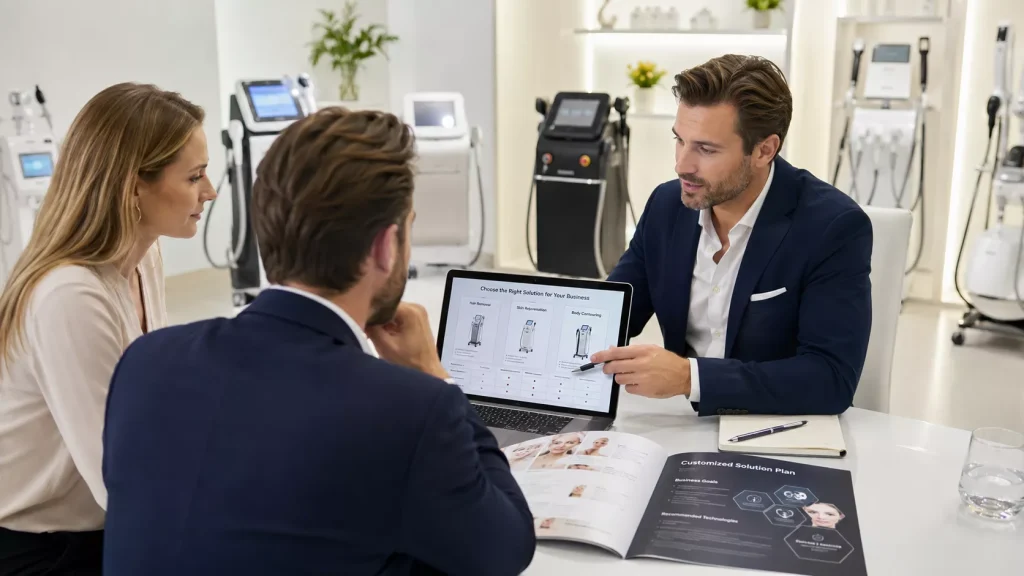
Many buyers contact a beauty machine manufacturer with only a general idea, not a final product plan. Sunwin helps buyers clarify their needs before they make a purchase decision.
- For salon owners:
Sunwin helps confirm which machines fit their service menu, such as anti-aging treatments, body sculpting, skin management, or other beauty projects. - For distributors:
Sunwin helps evaluate which equipment has better market potential, easier operation, stronger selling points, and better after-sales feasibility. - For brand owners:
Sunwin supports custom beauty machine development, including product positioning, appearance design, function planning, packaging, and OEM/ODM needs.
Before recommending a solution, Sunwin’s technical team focuses on several key questions:
- Who will use the machine?
- What service does the buyer want to offer?
- What price range fits the target market?
- Does the buyer need a standard machine or a customized solution?
- Are there any certification, branding, or local market requirements?
This consultation helps buyers avoid random purchasing. Instead of choosing a machine only by appearance or price, buyers can match the equipment with real business needs.
Product Operation Support After Purchase
After buyers receive the machine, they need clear operation guidance. This is especially important for professional beauty machines because every device has its own interface, working mode, parameters, accessories, and maintenance requirements.
Sunwin’s support includes product usage instructions and technical support, which help customers understand how to use the machine correctly.
For salons and clinics, operation support can include:
- Product manuals
- Usage steps
- Parameter explanation
- Basic maintenance guidance
- Accessory replacement instructions
- Troubleshooting support
- Video or image-based operation guidance
This support helps new staff learn faster. It also helps business owners reduce operational mistakes during daily service.
For distributors, operational support plays another role. A distributor not only sells machines but also supports local buyers. When the factory provides clear technical materials, distributors can train their sales team, answer customer questions faster, and build stronger trust in the local market.
OEM/ODM Support for Custom Beauty Machine Buyers
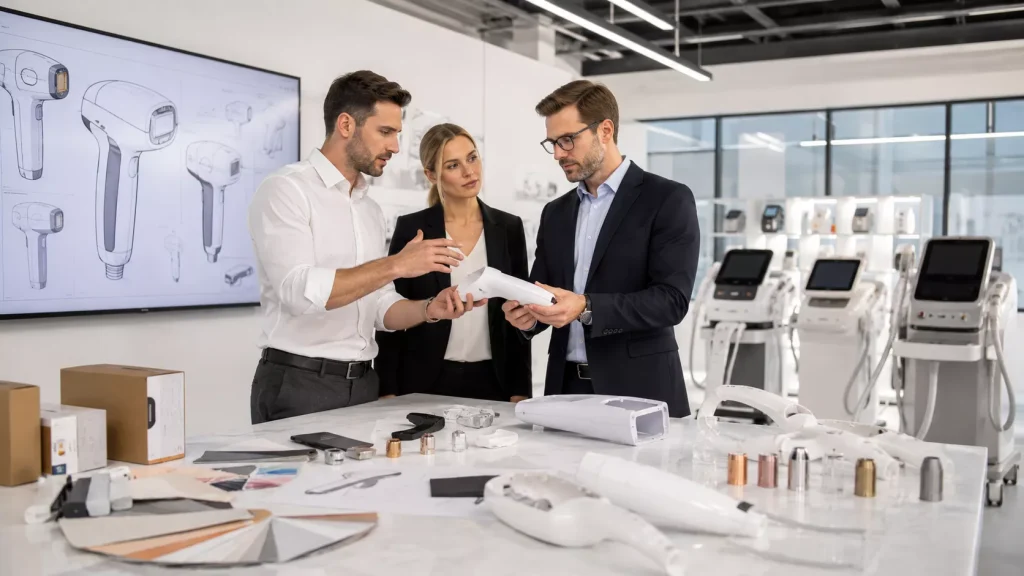
Some buyers do not want a standard machine. They want their own design, their own brand, or a product that fits a specific market segment. This is where OEM/ODM beauty machine support becomes important.
Sunwin provides OEM/ODM solutions for buyers who need more than a ready-made product. A custom project may include appearance design, structure development, function adjustment, logo customization, packaging design, accessory matching, or private-label production.
OEM/ODM support works best for:
- Beauty machine brands
- Regional distributors
- Chain beauty salons
- Aesthetic clinics
- Importers
- E-commerce sellers
- Companies developing new product lines
A strong manufacturer does not simply accept a design and start production. The technical team checks whether the design can work in real production. They look at structure, components, suppliers, assembly, cost, and production feasibility. This process helps buyers reduce risk before they spend money on molds and mass production.
Standard Workflow for a New Custom Project
A new custom beauty machine project usually takes about 3–6 months. The timeline depends on the product structure, material, design complexity, component availability, testing rounds, and mold preparation.
Sunwin can follow a structured workflow to move a custom project from idea to finished machine.
1. Requirement Confirmation and Project Setup
The first step is requirement confirmation. Sunwin communicates with the client, reviews the client’s existing materials, and clarifies the product direction.
At this stage, the team may discuss:
- Target market
- Product positioning
- Main functions
- Appearance style
- Treatment scenario
- Existing reference products
- Budget range
- Certification needs
- Expected order quantity
This step builds the foundation for the whole project. If the product direction stays unclear, later design and testing will waste time. Clear requirements help both the client and the factory work toward the same target.
2. Solution Design and STP File Optimization
After the project direction becomes clear, the team moves into solution design.
Sunwin can take responsibility for the design. The client can also provide an STP design file. When the client provides the file, Sunwin checks whether the structure matches existing supplier components and real production conditions.
This step is very practical. A design may look good on screen, but it may not fit available parts, wiring space, internal modules, heat dissipation, assembly methods, or production cost. The factory can optimize the STP file based on supplier components and manufacturing experience.
This reduces the chance of major changes later.
3. Prototype Sampling and Verification
Once the drawings are confirmed, the project moves to prototype sampling.
For mainstream ABS material, the team can use 3D printing after drawing confirmation. For metal designs, sheet metal sampling can create a sample without opening a mold. This helps the client check the appearance and structure at a lower cost.
Prototype sampling allows the team to test the real product, not just the design file. The team can check whether the shell fits, whether the accessories assemble correctly, whether the structure feels stable, and whether the user experience matches the original plan.
This step protects the buyer from costly mistakes before mold opening.
4. Component Assembly and Repeated Testing
After the prototype is ready, the team assembles components and tests the sample. If the structure, function, or assembly does not meet the requirement, the team adjusts the drawings and repeats the sampling process.
For a custom beauty machine, 3–6 rounds of iteration can be normal. This does not mean the project is failing. It means the team is improving the product before mass production.
Each round can improve:
- Component fit
- Shell structure
- Internal layout
- Operation convenience
- Product stability
- Maintenance access
- Production reliability
This stage requires patience. A custom beauty machine must work as a complete system, not just a good-looking shell.
5. Mold Opening and Mass Production Preparation
When the final drawings pass confirmation, the project enters mold preparation. Depending on the product structure, the process may include injection molding or blister molding. Mold development usually takes about one month.
This is why early testing is so important. Once the mold opens, design changes become more expensive and slower. A careful prototype stage helps the client avoid unnecessary mold changes.
After mold completion, Sunwin can move into batch production and delivery according to the confirmed order plan.
Suggested Timeline for a Custom Beauty Machine Project
| Requirement Setup | Confirm needs, collect materials, define product direction | 1–2 weeks |
| Solution Design | Design support or STP file optimization | 2–4 weeks |
| Prototype Sampling | 3D printing or sheet metal sample making | 2–4 weeks |
| Testing & Iteration | Assembly testing, drawing adjustment, repeated sampling | 1–3 months |
| Mold Opening | Injection molding or blister mold preparation | Around 1 month |
| Mass Production | Batch production and delivery | Based on order quantity |
Certification Support for Global Buyers
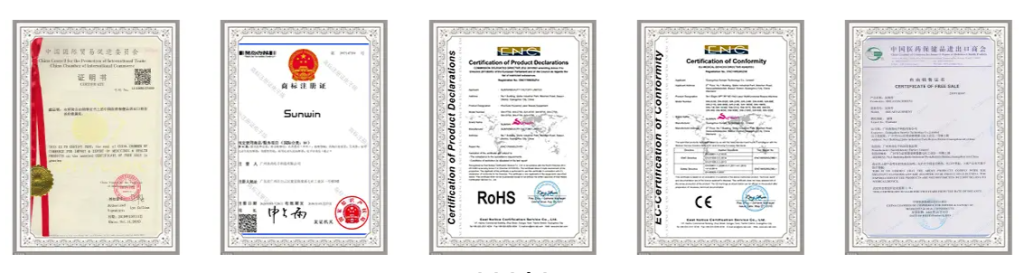
Beauty machine buyers often need certification documents for import, sales, distribution, and marketing. Different products and markets may require different documents.
Sunwin can provide corresponding certification support according to product type, including CE, FDA, RoHS, ISO 13485, and EMC documents when applicable.
These documents help distributors and importers prepare for customs clearance, local registration, sales presentations, and channel cooperation. Buyers should also check local regulations before selling the machine in their market, because each country may have its own compliance requirements.
Business Case and Long-Term Support
Technical support should not stop after the first order. B2B buyers need long-term cooperation, especially when they sell machines to local salons, clinics, or end customers.
Sunwin’s Technology and Support Services page mentions business cooperation cases and highlights long-term support factors such as fast response and sustained improvement.
For buyers, this creates practical value. A distributor can ask for technical materials when training local clients. A salon owner can request guidance when staff changes. A brand customer can discuss future upgrades after the first custom product enters the market.
This kind of support makes cooperation more stable. It also helps buyers build confidence when they promote the machines to their own customers.
Conclusion
Beauty machine buyers need more than a supplier. They need a technical partner who understands product selection, operation training, customization, prototyping, certification, and production.
Sunwin provides support across the full buying process. The team helps buyers confirm product direction, understand machine operation, prepare OEM/ODM projects, test prototypes, optimize designs, open molds, and move into mass production.
For salons, clinics, distributors, and private-label brands, this support can reduce risk and improve project success. A machine may start as a product purchase, but with the right technical support, it can become a stronger business opportunity.

 EN
 ES
 AR
 FR
 JA
 DE
